Research Writing
Ch1. Background
A Techno-Organic Metaphysical Discourse of Life
Technology and organic life have had a long-standing relationship within what is known as a philosophy of biology[16][17], specifically concerning discussions of an understanding of life. Within this discourse, the main issue identified by many is the conflict between Mechanism and Organicism. However, since the late 19th century, scientists and philosophers have begun to recognize a merging of the two worldviews into what David F. Channell later terms a "bionic"[18][19] worldview. In the following, I will present a brief overview of the main ideas behind all three philosophical perspectives with an emphasis on the new emerging stance presented by Channell.
[16] Krois, John Michael. "Ernst Cassirer's Philosophy of Biology". Sign Systems Studies 32. 2004.
[18] Channell, David F., The Vital Machine: A Study of Technology and Organic Life. New York, Oxford: Oxford University Press, 1991.
[19] The word bionics has two meanings: the first implies life-like, or mimicry of life; the second refers to a hybrid between biological organism and technology. In his book, Channell is using the second meaning.
1.1 On Mechanism
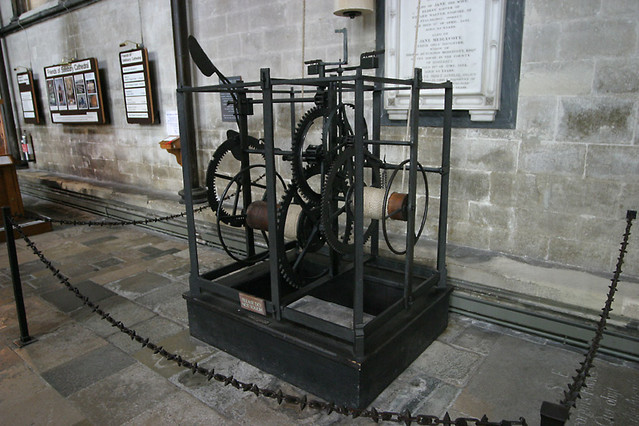
We perceive and think in the ways permitted by our instruments, this is well exemplified in the tradition of Mechanism. Although the term mechanical philosophy did not emerge until the Scientific Revolution of the 16th and 17th century[20], its root can be found in the ancient Greek Pythagoran in his hypothesis that the world is made up of numbers. This quantitative approach was popularized during the medieval period with the advent of mechanical devices. The dark ages of Europe, despite popular belief, saw an abundance of technological achievements, the most significant being the invention of the mechanical clock[21][22]. Since antiquity, time keeping was closely associated with astronomy and religious life, and the clock was perceived as a miniature version of the universe at large. The mechanical clock became concrete evidence that nature could be understood through the portal of man’s own creation, the machine thus became a model of the natural world.
[20] Allen, Garland E. "Mechanism, Vitalism and Organicism in late Nineteenth and Twentieth-century Biology: the Importance of Historical Context". Studies in History and Philosophy of Biological and Biomedical Sciences 36. 2005.
[21] Channell, David F., The Vital Machine: A Study of Technology and Organic Life. New York, Oxford: Oxford University Press, 1991.
[22] The Medieval Clock, made in 1386, possibly the oldest working clock in existence.
Descartes brought the relationship between machine and organism into modernity by advancing a theory that was not based on the belief of God, but rather scientific methodologies. Specifically, he was interested in the relationship of the mind and the body articulated in his famous thesis of the mind-body problem[23]. The basis of his theory lay in a definitive separation between mind and matter, in which the former is active non-material, while the latter is inert material. Within this structure, life is presented as twofold: conscious like that of humans and unconscious like that of animals. The living body, regardless of human or nonhuman, is understood as the sum of complex mechanisms guided by principles of physics. Beginning in the second half of the 17th century, the mechanical approach began to influence the field of physiology and its theories to some extent assisted in advancing understanding of certain bodily functions such as the circulation of blood[24]. However, Mechanism could not explain the complex behaviors of the organism as a whole.
[23] Rene Descartes' Mind-Body Distinction, Internet Encyclopedia of Philosophy
[24] William Harvey discovers vascular circulation system in the 17th century.
Mechanical philosophy is often criticized for its reductive explanation of life phenomenon. Firstly, although it presented a means for understanding physical motion, and despite Descartes’ efforts of removing it from the theological realm, Mechanism was still unable to specify a source of force and motion beyond the mechanics of the body. A large part of the history of Mechanism was influenced by the concept of the automaton, however, the problem remained that machines were unable to transform or self generate energy to sustain motion. Second, the comparison drawn between technological tools and special animalistic features was a confusion of purposeful functionality with complex potential. Whereas tools were designed with specific purposes in mind to guide functionality, organic life displayed a potential of complex functionalities, some apparent and some beyond human perception.
1.2 On Organicism
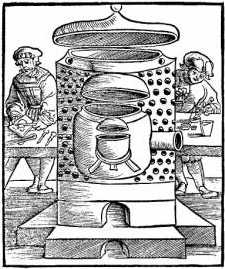
The earliest theory of an organic view of life is often attributed to Aristotle. In his De Anima[25], he introduces the concept of psukhe[26], or soul, which he believes is the motivation of life. Different from Descartes’ definition of soul as mind and consciousness, Aristotle’s soul identifies with a superlative life force that flows through living organisms. Similar to dualism, he makes a distinction between life and the living in that life itself is immaterial and eternal and can only be perceived through manifestations of the living[27][28]. However, unlike Mechanism philosophers, Aristotle focuses on the psukhe as a whole that is more than the sum of its individual representations. This concept of the relationship between the microcosm and macrocosm is best seen in pre-modern developments of alchemy. The alchemist believes that by experimenting on a small part of the universe, he is in fact connecting and interacting with the larger whole[29][30]. Through manipulation of mechanical and chemical processes, he releases the life potential that lies dormant in seemingly inanimate material. Technological means becomes a rite of birth where the machine is understood in the context of organic processes[31].
[26] Psukhe is the ancient Greek word for soul.
[27] De Anima, Aristotle
[28] Thacker, Eugene, After Life. Chicago and London: University of Chicago Press, 2010.
[29] Channell, David F., The Vital Machine: A Study of Technology and Organic Life. New York, Oxford: Oxford University Press, 1991.
[30] Alchemical furnace from Geber, 1529.
[31] Channell, David F., The Vital Machine: A Study of Technology and Organic Life. New York, Oxford: Oxford University Press, 1991.
Though early Organicism was largely entangled with mysticism and spiritual beliefs, its legacy continued well into the Scientific Revolution[32] and developed into what historian Allen Debus terms chemical philosophy[33]. As observed in the burning of certain materials such as wood and coal to create fire, and the process of decay perceived in only dead but not living bodies, the vital substance, originally believed to be transcendent, began to take on materialistic characteristics. Luigi Galvani’s discovery of “animal electricity ” presented the possibility that electricity – at the time understood as a liquid fluid – within the body provided a source for mechanical movement[34]. Leading up to the early 1900s, a theory of evolution – eventually popularized by Charles Darwin – was slowly developing. This theory advanced a new understanding of the relationship between singular simple phenomenon and complex organisms. It proposed two “chains of being”[35] for plants and animals, where the purpose of the life force was to advance inorganic material towards complexity.
[33] Channell, David F., The Vital Machine: A Study of Technology and Organic Life. New York, Oxford: Oxford University Press, 1991.
[34] Channell, David F., The Vital Machine: A Study of Technology and Organic Life. New York, Oxford: Oxford University Press, 1991.
[35] Great Chain of Being
Despite of its attempts to explain life through relationship and process within a whole, Organicism was nonetheless lacking. It was unclear whether the vital potential innate in material was an autonomous whole or emerged from organization. Although Darwin pointed out a purposeful tendency towards complexity through evolution, the cause of this tendency remained deterministic and vague. Throughout history, both Mechanism and Organicism drew inspiration from not only similar sources of the times, but also each other. Towards the late 1800s, it became increasingly clear that a more intentional union between the two was necessary[36]. New investigations in the nature of light and electromagnetism supported beliefs in both worldviews. With the invention of the microscope, developments in the study of microorganisms challenged both traditional physics and biology research by combining experimental and observational methodologies. In the words of Alfred North Whitehead:
[36] Channell, David F., The Vital Machine: A Study of Technology and Organic Life. New York, Oxford: Oxford University Press, 1991.
Science is taking on a new aspect that is neither purely physical nor purely biological[37].
[37] Channell, David F., The Vital Machine: A Study of Technology and Organic Life. New York, Oxford: Oxford University Press, 1991.
1.3 Channell's Bionic Worldview
The word bionic, first coined by Jack E. Steels in 1958, refers to the application of biological methods and system theories derived from nature to the designing of engineering systems and technology. Although not exclusively limited to its original meaning, the use of the word in Channell’s writing does however reference the influence of scientific developments and inventions that have played a key role in establishing what he describes as a new dominant worldview in the 20th and 21st century. Three major disciplines have shaped a new philosophy of life, namely microbiology, quantum physics and computer science[38]. Whether living materials, inanimate matter or silicon machines, our perspective has shifted from the individual or the whole to a system based understanding of the world that bridges the gap between the former and the latter. The single unit is simultaneously independent and collective in the sense that its self-governed behaviors influence and shape the outcome of the whole. Ordinary simple mechanisms react to extraordinary conditions that are specific to each particular situation. The ordinary and extraordinary impact upon each other in unpredictable ways that lead to unpredictable results within the total sum.
[38] Channell, David F., The Vital Machine: A Study of Technology and Organic Life. New York, Oxford: Oxford University Press, 1991.
Following this line of thought, life is believed to rise out of ordinary materials that follow the basic laws of physics and chemistry under extraordinary conditions. The key point here is not just the external environment in which these materials are situated, but also an internal environment on a quantum micro level concerning the specific interactions between cells or atoms. Thus, the previously static and determined body is in fact fluid and porous material that only implies the illusion of a whole. This environment becomes a potential habitat for the emergence of life. The significance of this theory is that it collapses the boundaries between life and matter by suggesting that life itself is based on the same principles of matter. But unlike the reductionist approach of Mechanism, here the potential lies in the unfolding circumstance of the microcosm and macrocosm combined, where development is inseparable from the thing itself. This potential is inherent in all matter. In the words of physicist David Bohm:
When understood through the implicate order, inanimate matter and living beings are seen to be, in certain key respects, basically similar in their modes of existence… It may indeed be said that life is enfolded in the totality and that, even when it is not manifest, it is somehow “implicit” in what we generally call a situation in which there is no life.[39]
[39] Channell, David F., The Vital Machine: A Study of Technology and Organic Life. New York, Oxford: Oxford University Press, 1991.
It is important to realize that these contemplations on the subject of life are not true reflections of life itself, but rather merely symbolic manifestations in our minds. Rather than using the term animals rationale, Ernst Cassirer defines human beings as animals symbolicum[40][41], pointing out our tendency to create cultural mediation through meaning making that renders it impossible for us to immediately confront reality. Similarly, Eugene Thacker in his After Life draws attention to our own possible limitations within this discourse:
[40] Channell, David F., The Vital Machine: A Study of Technology and Organic Life. New York, Oxford: Oxford University Press, 1991.
[41] Animals Symbolicum
What if life is not assumed to reach its pinnacle in human life? What if life is only incidentally, and not fundamentally, an anthropocentric phenomenon? And what if life actually has very little to do with the presumed self-evident nature of the living?[42]
[42] Thacker, Eugene, After Life. Chicago and London: University of Chicago Press, 2010.
It is these very questions that the "bionic" stance poses as a challenge to traditional western thought. The concept of emergence introduces notions of decentralization, self-regulation and unpredictability, all alien to the static humanistic perspective of the world. It alludes to new possibilities that are beyond the human being, that are transhuman, and even posthuman. These possibilities are the focus of my exploration within this thesis. In the next chapter, I will discuss the ethical debates surrounding such proposed futures of life on earth, and argue the validity and value of such investigations.
Bibliography
Krois, John Michael. "Ernst Cassirer's Philosophy of Biology". Sign Systems Studies 32. 2004.
Channell, David F., The Vital Machine: A Study of Technology and Organic Life. New York, Oxford: Oxford University Press, 1991.
Allen, Garland E. "Mechanism, Vitalism and Organicism in late Nineteenth and Twentieth-century Biology: the Importance of Historical Context". Studies in History and Philosophy of Biological and Biomedical Sciences 36. 2005.
De Anima, Aristotle
Thacker, Eugene, After Life. Chicago and London: University of Chicago Press, 2010.